The Best AI Tools for Personalized Content Targeting in 2026
Why Generic Content No Longer Converts in 2026
LinkedIn's feed has a new problem. It's not a shortage of content — it's a flood of content that looks identical. AI writing tools lowered the barrier to posting, and the result is a scroll-stopping sea of templated hooks, recycled takes, and posts written for no one in particular.
The data backs this up: 79% of B2B decision-makers now actively ignore generic outreach, whether that's cold DMs or posts that fail to speak directly to their situation. The same dynamic applies to content. When a founder, consultant, or sales director encounters a post that feels like it could have been written for anyone, it converts no one.
This is where ai for social media posts has evolved. The category has split in two: tools that generate content at volume, and tools that generate content that converts — because they understand who you're talking to, what they care about, and what action you want them to take.
AI content personalization is now the critical dividing line. The best tools in 2026 don't just draft posts — they use your brand documentation, your ICP profile, and real-time behavioral signals to deliver content that resonates with the exact audience you're trying to reach. Whether that's a LinkedIn post that books a meeting, a landing page that speaks to a specific account, or an email campaign that references actual buyer intent, personalization at this level requires a dedicated tool — not a generic prompt.
This guide covers the eight best options available in 2026, across four distinct use cases.
What Is AI Content Personalization — and Why It's Different from Basic Targeting
AI content personalization is the use of machine learning and structured brand data to generate, adapt, or serve content that is meaningfully different for different audience segments — not just inserting a [First Name] variable into a template.
Basic targeting tells you who to reach. AI content personalization changes what you say based on that audience. A B2B SaaS founder and a mid-market sales director at an enterprise company may both follow you on LinkedIn — but they have entirely different pain points, vocabulary, and reasons to buy. Generic content speaks to neither. Personalized content converts both.
In practice, this plays out across two layers:
- Audience-level personalization — content generated or adapted for a defined ICP: their industry, role, company stage, and common objections
- Real-time behavioral personalization — content or experiences that adjust based on live signals: what someone just searched, a page they visited, or a post they engaged with
For LinkedIn creators and B2B sales teams, the most powerful lever is audience-level personalization. For enterprise e-commerce and ABM teams, real-time behavioral personalization (via tools like Dynamic Yield or Mutiny) is the priority. Understanding which layer you actually need is the first step to choosing the right tool.
Understanding how to build a strong linkedin content strategy starts here — with knowing who you're writing for before you write a single word.
What to Look for in AI Content Personalization Tools
Not all content personalization tools solve the same problem. Before comparing features, align the tool to your use case. Here are the six criteria that matter most in 2026:
1. ICP and audience depth Does the tool understand who you're targeting at a meaningful level — job title, industry, company stage, pain point — or does it operate on generic segments? The best tools let you define your ICP explicitly and use it to shape every output.
2. Brand voice consistency Can it learn and maintain your unique voice across multiple posts or campaigns, or does every output require heavy editing to not sound like a press release? Look for tools that ingest brand documentation, not just a tone slider.
3. Content format coverage Does the tool support the formats that drive results in your channel? For LinkedIn, that means long-form posts, carousels, and hooks. For B2B web, that means dynamic landing pages and banners. Assess fit by channel, not just capability.
4. Conversion tracking Can you connect personalized content to actual outcomes — meetings booked, pipeline generated, conversion rate uplift — or does the tool only report on engagement vanity metrics like impressions and likes?
5. Scheduling and distribution For social-first teams, a built-in social media scheduler matters. Personalization without consistent delivery is just good drafts sitting in a folder.
6. Ease of implementation Enterprise web personalization tools often require developer resources and weeks of setup. AI writing tools for B2B content creators should be deployable in minutes. Know your implementation capacity before committing.
The tools below are organized by primary use case: LinkedIn content, GTM AI writing, B2B web personalization, and enterprise omnichannel personalization.
Quick Comparison: 8 Best AI Tools for Personalized Content Targeting
| Tool | Best For | Starting Price |
|---|---|---|
| Cassy by Leapd | LinkedIn creators & B2B teams | Free / $39/mo |
| Jasper | Multi-channel brand content at scale | $59/mo/seat |
| Copy.ai | GTM teams with cross-channel workflows | Custom |
| Taplio | LinkedIn analytics-driven content | $32/mo |
| Dynamic Yield | Enterprise e-commerce personalization | Custom |
| HubSpot Content Hub | B2B teams using HubSpot CRM | $20/mo+ |
| Mutiny | B2B SaaS ABM landing page personalization | Custom |
| Adobe Target | Enterprise omnichannel personalization | Custom |
Cassy by Leapd: Best for LinkedIn Creators and B2B Teams Who Want Content That Books Meetings
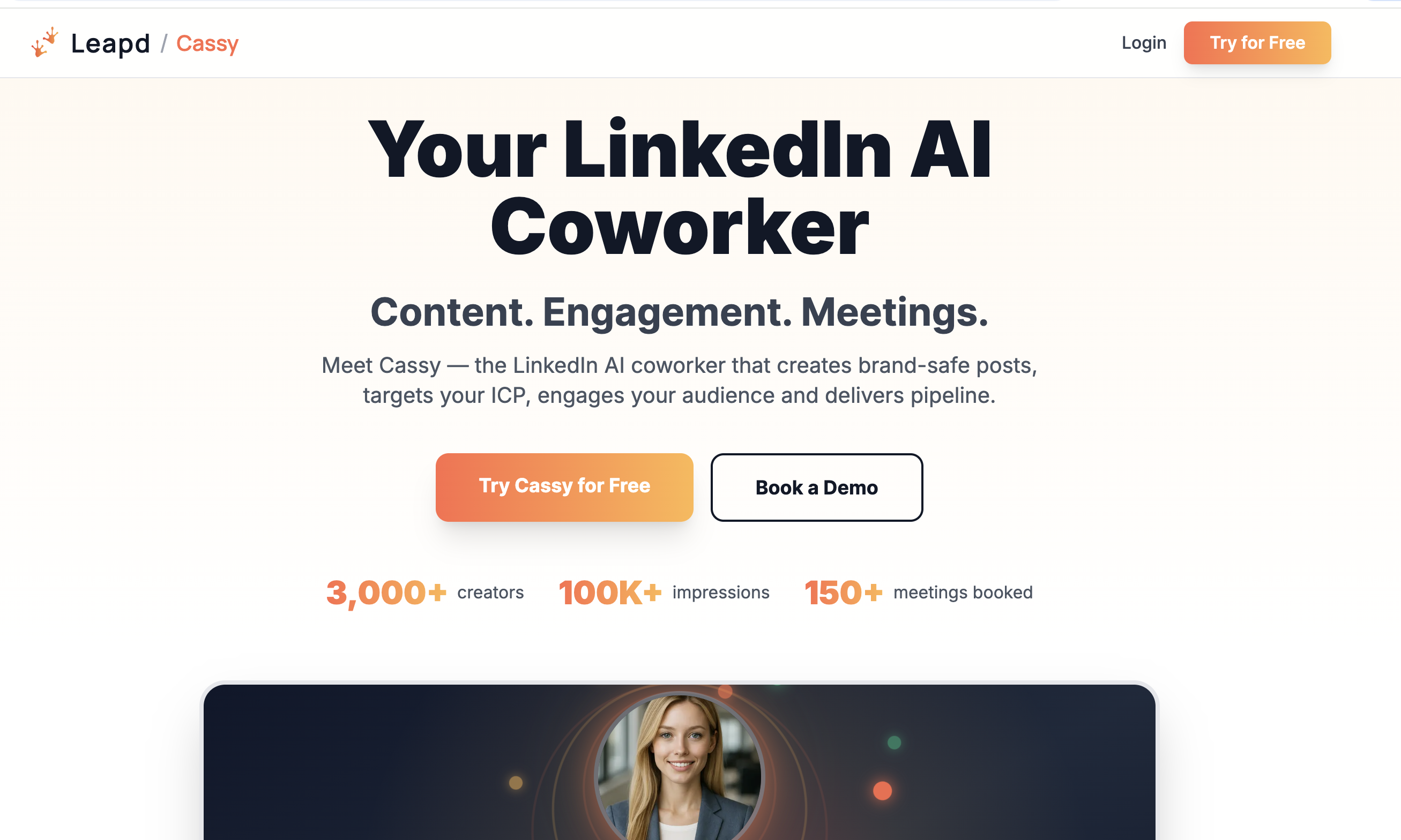
Most tools help you post. Cassy helps you convert.
Cassy is an AI-powered LinkedIn coworker built by Leapd that operates on a fundamentally different model from every other tool in this list. It doesn't generate content from a blank prompt. Before writing a single word, Cassy ingests your Brand Doc — your positioning, ICP, tone of voice, and industry context — conducts deep research on trending topics in your niche, and then generates posts calibrated to resonate with your specific audience.
That workflow is the key distinction. The sequence — Brand Doc → Deep Research → AI Posts → Engagement → Meeting Booked — means content is never generic. Every post is aimed at a defined ICP with a clear conversion intent.
Key features for B2B content targeting:
- Deep Personalization — Cassy learns your brand voice and ICP, then applies that context to every output. No generic templates.
- Viral Post Discovery — Automatically surfaces posts trending in your niche so you never miss what's resonating with your target audience right now
- Viral Post Repurposing — Found a high-performing post? Cassy rewrites it in your voice while preserving the structure that made it work
- URL & Docs → Posts — Drop a YouTube link, blog URL, PDF, or document and Cassy converts it into a post in your voice. Supported formats include YouTube, PDFs, blogs, and Google Docs
- AI Image Generation — One-click custom visuals for every post, no design skills required
- Idea Generator — Generates multiple post angles and hooks from a single topic so you never run out of directions
- Smart Scheduling & Analytics — Post at optimal times, track engagement, reach, and performance over time. A true linkedin post scheduling tool built directly into the workflow
- Multi-account management — Handle multiple LinkedIn accounts or client profiles natively, with no extra cost
- Natural conversational interface — Assign tasks to Cassy through chat: "Find viral posts in my niche and create a week of content." Cassy handles the rest
For agencies managing client accounts, the Agency plan ($59/month) includes unlimited LinkedIn accounts, unlimited posts, and client management and invite features. For individual creators and sales professionals, the Pro plan ($39/month) covers 50 posts, 50 AI images, and full deep personalization — all the tools needed to build a b2b lead generation linkedin pipeline from content.
Over 5,000 creators use Cassy, with the platform producing 300K+ posts and tracking 200+ meetings booked directly from LinkedIn content. Users consistently highlight that the deep personalization feature means posts feel authentic — not like they were written by a tool that read the same LinkedIn playbook as everyone else.
Pricing: Free (5 posts, no credit card required) → Pro at $39/month → Team at $59/seat/month → Agency at $59/month
Beyond drafting, Cassy is built as a LinkedIn GTM coworker — content, engagement, and pipeline in one workspace. Cassy tracks the profiles and topics that matter to your pipeline (investors, target prospects, customers, hot industry conversations), drafts comments in your voice on the high-signal posts those people are publishing, and executes bulk-approved engagement actions within LinkedIn's safe limits. The team workspace lets founders, executives, sales reps, and marketers plan from one shared calendar — turning ten people posting in isolation into one coordinated GTM motion. Teams comparing Cassy with signal-listening tools should also see Cassy vs Outx and Cassy vs Trigify for how Cassy unifies listening and content creation rather than splitting them across separate stacks.
The Prospects agent extends the same workflow into qualified pipeline. Cassy extracts everyone interacting with the topics and profiles you watch, qualifies them against criteria you define per list (sales ICP, investor profile, partner profile), and hands you ready prospects with reasoning — what they engaged with, why they qualify, suggested talking points. Built for teams running a serious linkedin lead generation or linkedin prospecting motion: the qualified list flows into your existing linkedin outreach stack (Apollo, Instantly, Lemlist) or CRM. On the engagement side, the same agent lifts your linkedin engagement rate by drafting on-brand comments in your voice that you bulk-approve in one click — Cassy executes the linkedin auto comment workflow within LinkedIn's safe limits.
Limitation: Purpose-built for LinkedIn. If your primary channel is website personalization or email at enterprise scale, you'll need a different tool for those surfaces.
Jasper: Best for Marketing Teams Scaling Brand-Consistent Content Across Channels
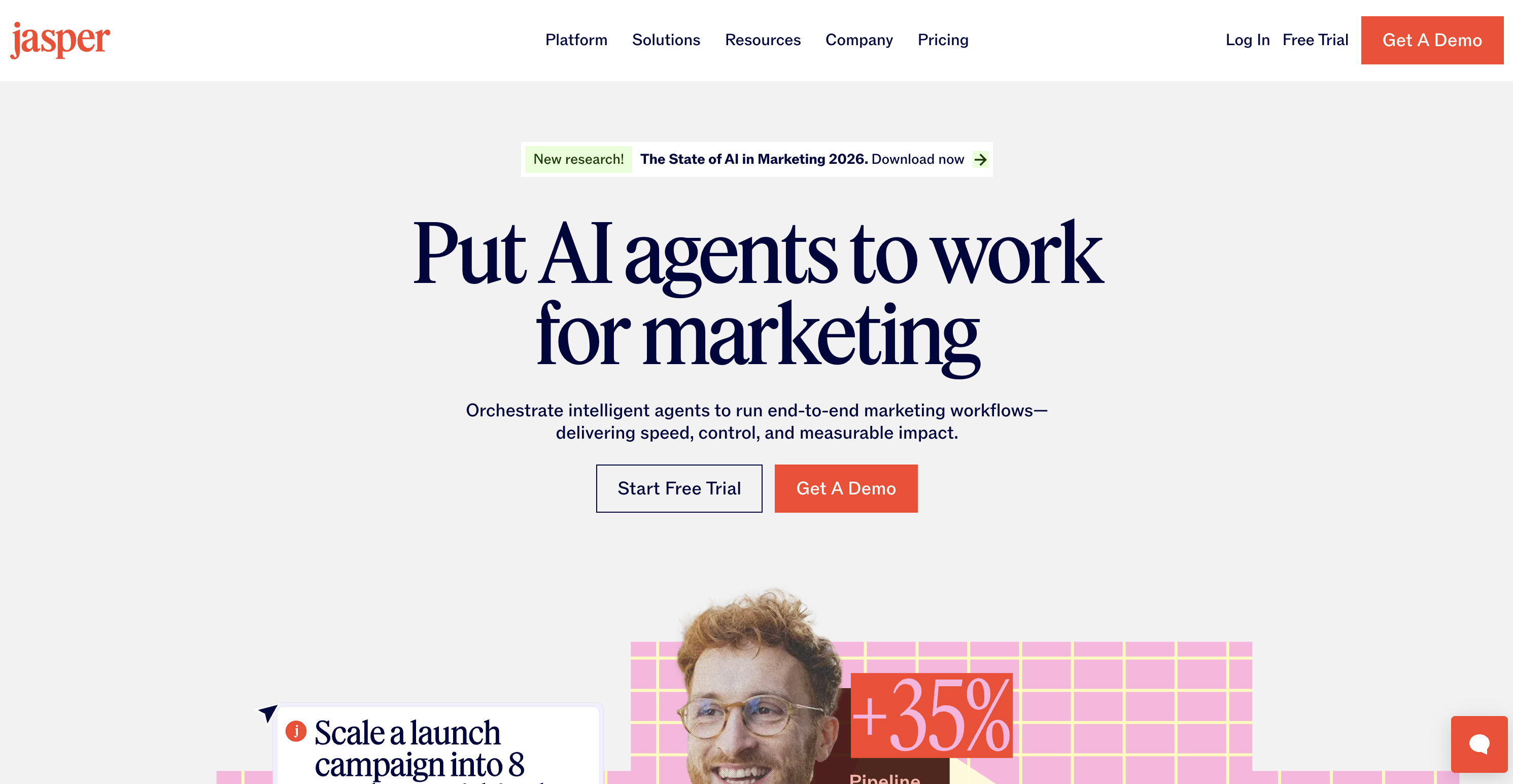
Jasper is a generative AI platform purpose-built for marketing teams that need to produce high volumes of content across multiple channels while maintaining strict brand consistency. Where Cassy is built for LinkedIn-native conversion, Jasper is built for marketing departments that need blog posts, ad copy, social content, email campaigns, and press releases — all aligned to the same brand voice.
Jasper's standout ai content personalization feature is its Brand IQ system: a proprietary layer that ingests Brand Voice settings, a multi-modal Knowledge Base, and Audience definitions (up to unlimited on the Business plan), then applies them across every output. The result is that a content marketer, performance marketer, and field marketer can all generate assets that feel like they came from the same brand — without manually briefing the AI each time.
The platform also includes a Personalization Agent for scaling content variations across segments — particularly useful for ABM campaigns, localized landing pages, and targeted email sequences.
Key features: Brand Voice (up to unlimited voices on Business), multi-modal Knowledge Base, Remix Content for channel repurposing, 100+ purpose-built marketing apps, browser extension for in-context writing, and an LLM-agnostic architecture that routes outputs through the best-fit model.
Pricing: Pro at $59/month per seat (billed annually) or $69/month billed monthly. Business plan at custom pricing for teams needing unlimited brand customization, API access, and enterprise governance.
Limitation: No native social scheduling or LinkedIn-specific analytics. It generates the content, but delivery, scheduling, and performance tracking require separate tools. The Pro plan also caps Brand Voices at 2, which constrains agencies or teams managing multiple brands.
Copy.ai: Best for GTM Teams Maintaining Consistent Messaging Across LinkedIn, Ads, and Email
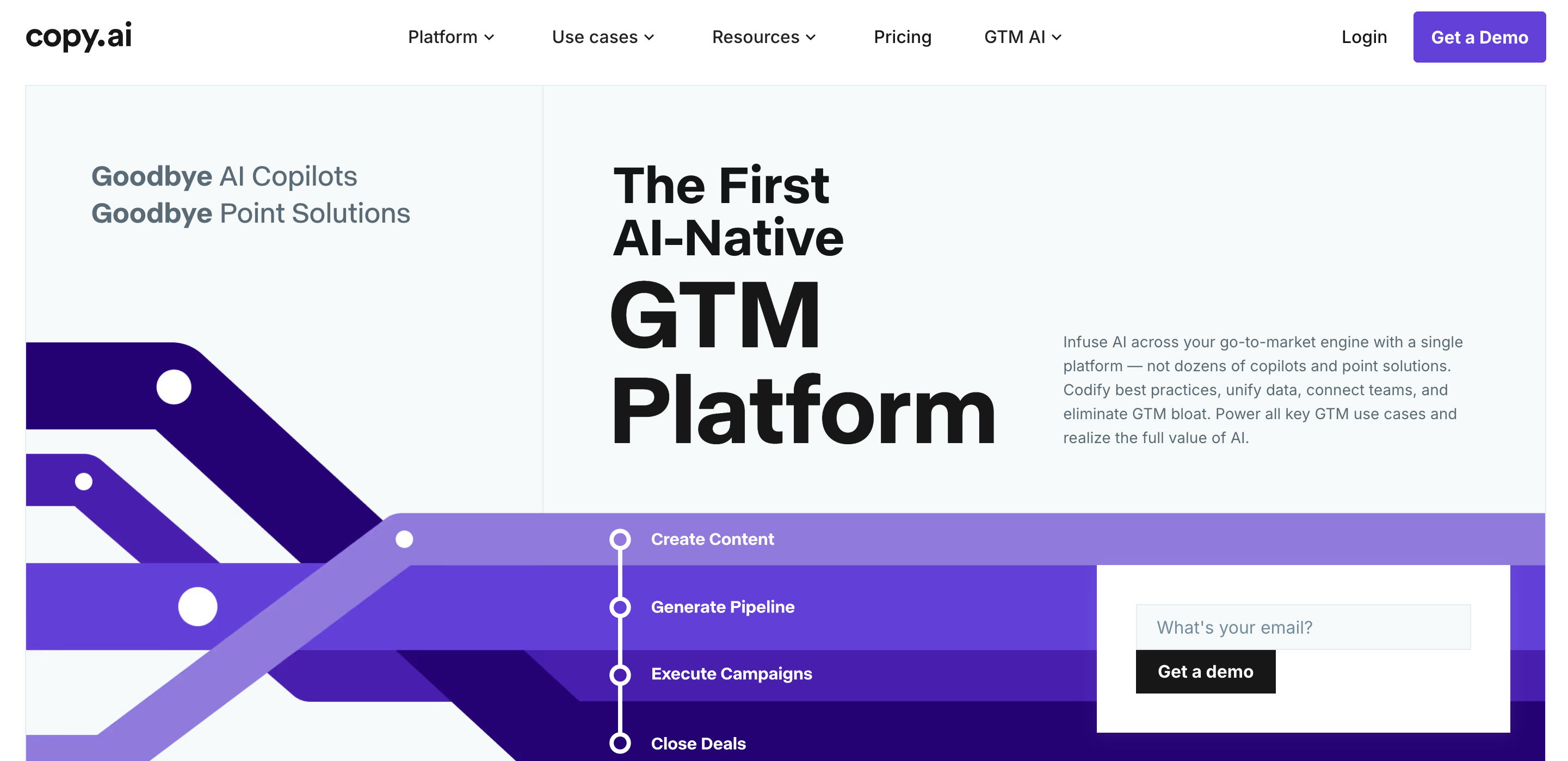
Copy.ai has evolved from a standalone copywriting tool into a full GTM AI platform designed for go-to-market teams that need to maintain consistent, personalized messaging across sales sequences, ads, organic content, and outbound outreach — all from a single system.
The platform's core personalization architecture rests on three pillars: Infobase (a persistent knowledge repository storing your company's positioning, messaging, and product details that the AI references on every task), Brand Voice (a defined personality layer that shapes tone and style), and Workflows (multi-step automations that chain content generation tasks into end-to-end pipelines). A brief can automatically generate a blog draft, a LinkedIn post set, and a personalized email sequence without manual steps between them.
For B2B teams, Copy.ai is particularly valuable when LinkedIn content is part of a broader b2b lead generation strategies motion — where the same core ICP message needs to appear consistently across posts, ads, connection requests, and follow-up emails. The platform integrates with Salesforce, HubSpot, Gong, Outreach, and 2,000+ other tools via Zapier.
Key features: Workflow automation, Infobase, Brand Voice, 2,000+ integrations, LLM-agnostic (supports OpenAI, Anthropic, Gemini, Perplexity), Tables for data-driven content, and pre-built GTM use case templates.
Pricing: Free plan available. Paid plans at custom pricing — contact sales for team and enterprise tiers.
Limitation: Copy.ai is powerful for teams with defined GTM workflows and technical setup appetite. Solo founders or individual LinkedIn creators may find the platform's depth overwhelming relative to their actual use case, and it has no native LinkedIn scheduling or analytics.
Taplio: Best for LinkedIn Analytics-Driven Content Planning
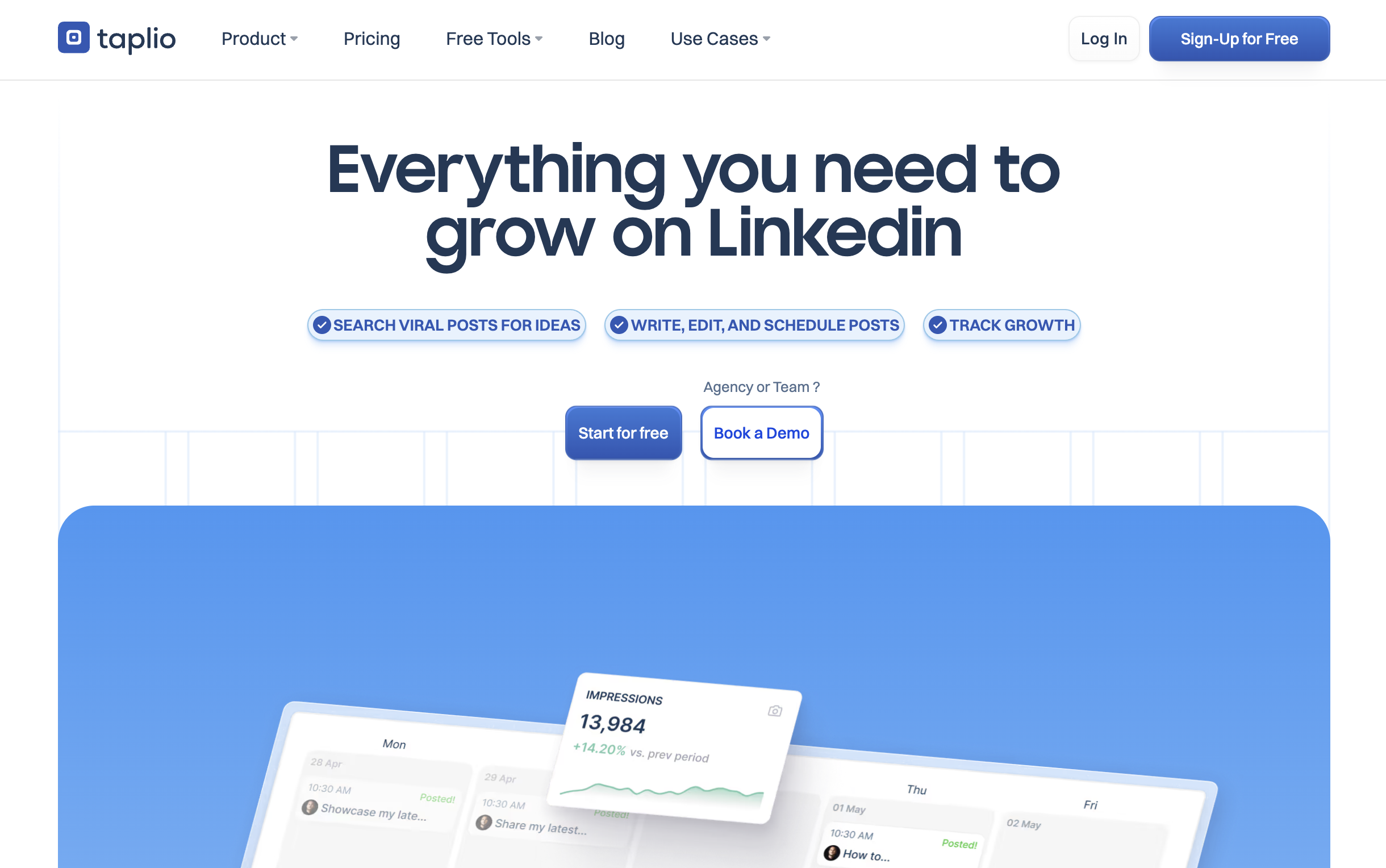
Taplio is a LinkedIn-native tool that combines AI content generation, post scheduling, engagement automation, and analytics into a single workflow. It's built specifically for LinkedIn personal branding — and its analytics capabilities are a genuine differentiator.
Taplio's AI is trained on a database of 5+ million LinkedIn posts, which means its content suggestions are grounded in what actually performs on the platform rather than general writing principles. The viral post inspiration feed lets users filter by keyword and surface the best-performing posts in any topic area — a useful research mechanism for finding what's resonating with a target audience before writing. Its AI social media post generator function covers the full workflow: hook selection, post generation, scheduling, and performance tracking.
For linkedin content creation tools, Taplio offers a carousel generator, smart reply automation for commenting at scale, and a Chrome extension that surfaces analytics and top posts directly within LinkedIn. The Growth plan ($49/month, billed yearly) includes repurposing tools and auto-reply features. The Pro plan ($149/month) unlocks unlimited AI credits, a 3M+ lead database, and auto-DM capabilities.
Key features: 5M+ viral post database, AI post writer, carousel generator, post scheduling, engagement automation (auto-comment, auto-reply), analytics dashboard, Chrome extension.
Pricing: Starter at $32/month (billed yearly), Growth at $49/month, Pro at $149/month. 7-day free trial on all plans.
Limitation: Taplio's personalization is lighter than Cassy's — it doesn't ingest brand documentation or conduct ICP research before generating content. The AI generates contextually relevant posts, but doesn't learn your specific voice or target audience profile in the same depth. As a linkedin engagement tool, it's strong on automation and analytics; for users who want ICP-targeted conversion content, the personalization layer is limited.
Dynamic Yield: Best for Enterprise E-Commerce and Website Personalization at Scale
Dynamic Yield, now owned by Mastercard, is recognized as a Leader in the Gartner® Magic Quadrant™ for Personalization Engines for eight consecutive years — reflecting its position as the dominant enterprise platform for website and omnichannel content personalization.
Dynamic Yield's Experience OS covers segmentation, targeting, algorithmic product recommendations, journey orchestration, and A/B testing across web, email, mobile apps, and ads. Its AI layer (AdaptML) continuously learns each customer's behavioral profile and updates recommendations in real time — enabling the kind of content personalization tools deployment that powers product recommendation engines for global retail brands.
For B2B e-commerce and enterprise teams, Dynamic Yield's breadth is its strength: one platform handles the full personalization stack, from audience segmentation to real-time content delivery across every digital touchpoint. The platform includes GDPR, CCPA, SOC2, and ISO 27001 compliance out of the box.
Key features: Segmentation, predictive targeting, algorithmic recommendations, A/B testing, journey orchestration, Experience APIs, multi-channel delivery (web, email, app, ads), enterprise security and compliance.
Pricing: Custom pricing based on traffic and feature scope. Demo required.
Limitation: Not a content creation tool — Dynamic Yield personalizes which content or product is shown to each user, but doesn't generate content itself. It also requires developer resources to implement and significant onboarding investment. Not suited for individual creators, agencies, or teams without a dedicated engineering function.
HubSpot Content Hub: Best for B2B Teams Connecting Content to CRM Pipeline
HubSpot Content Hub is the content management and AI writing layer of the HubSpot ecosystem, and its key differentiator is attribution: it connects content consumption to CRM pipeline and closed revenue, which answers the executive question most content tools can't: "What is this content actually generating?"
For B2B organizations already running HubSpot for CRM, email, and sales automation, Content Hub eliminates integration friction by using CRM data — contact lifecycle stage, past interactions, firmographic attributes — to personalize written content at the page level. This makes it particularly valuable for account-based marketing programs where the content served to a Series B SaaS startup should look different from the content served to an enterprise procurement team.
The platform's AI features include blog post generation, landing page creation, AI-assisted email writing, and b2b content personalization at the page level through smart content rules tied to CRM segments. It also includes social media publishing capabilities, making it a partial social media scheduler for agencies managing multiple client properties within the HubSpot ecosystem.
Key features: CRM-connected personalization, smart content rules, AI blog and email writing, landing page builder, social publishing, pipeline attribution reporting.
Pricing: Content Hub Starter from $20/month; Professional and Enterprise tiers at higher price points. Pricing scales with contact database size.
Limitation: The value proposition is heavily tied to HubSpot adoption. Teams not already using HubSpot CRM will find the attribution benefits limited, and standalone Content Hub without the broader HubSpot stack is an expensive content tool compared to dedicated alternatives. AI writing quality is competent but not best-in-class for volume generation.
Mutiny: Best for B2B SaaS Teams Personalizing Landing Pages for Target Accounts
Mutiny is a GTM AI agent purpose-built for B2B sales and marketing teams that need to create personalized, on-brand customer-facing assets without depending on design or development teams.
Mutiny's core capability is 1:1 ABM personalization: it learns your brand identity from your website and existing content, then adapts landing pages, proposals, executive business cases, meeting recaps, and event invites to match the specific account or persona being targeted. The platform offers Blueprints — pre-built templates for common GTM assets (1:1 ABM pages, impact reports, deal rooms, competitive comparisons) that Mutiny populates with account-specific data automatically.
For audience engagement platforms in the B2B SaaS context, Mutiny is particularly strong when the goal is account-specific web experiences: a landing page for a Series B fintech prospect looks and reads differently from one targeting an enterprise healthcare system — automatically, based on account data Mutiny pulls from your CRM and website.
Key features: 1:1 ABM page personalization, brand-aware asset generation, Blueprints library, account data integration, fast asset creation without design dependencies.
Pricing: Custom pricing. Demo required.
Limitation: Mutiny focuses on sales and marketing assets (landing pages, deal rooms, proposals) — it is not a social content tool and has no LinkedIn-native features. It's also priced for B2B SaaS teams with active outbound motions, not individual creators or small agencies.
Adobe Target: Best for Enterprise Organizations Running Omnichannel Personalization
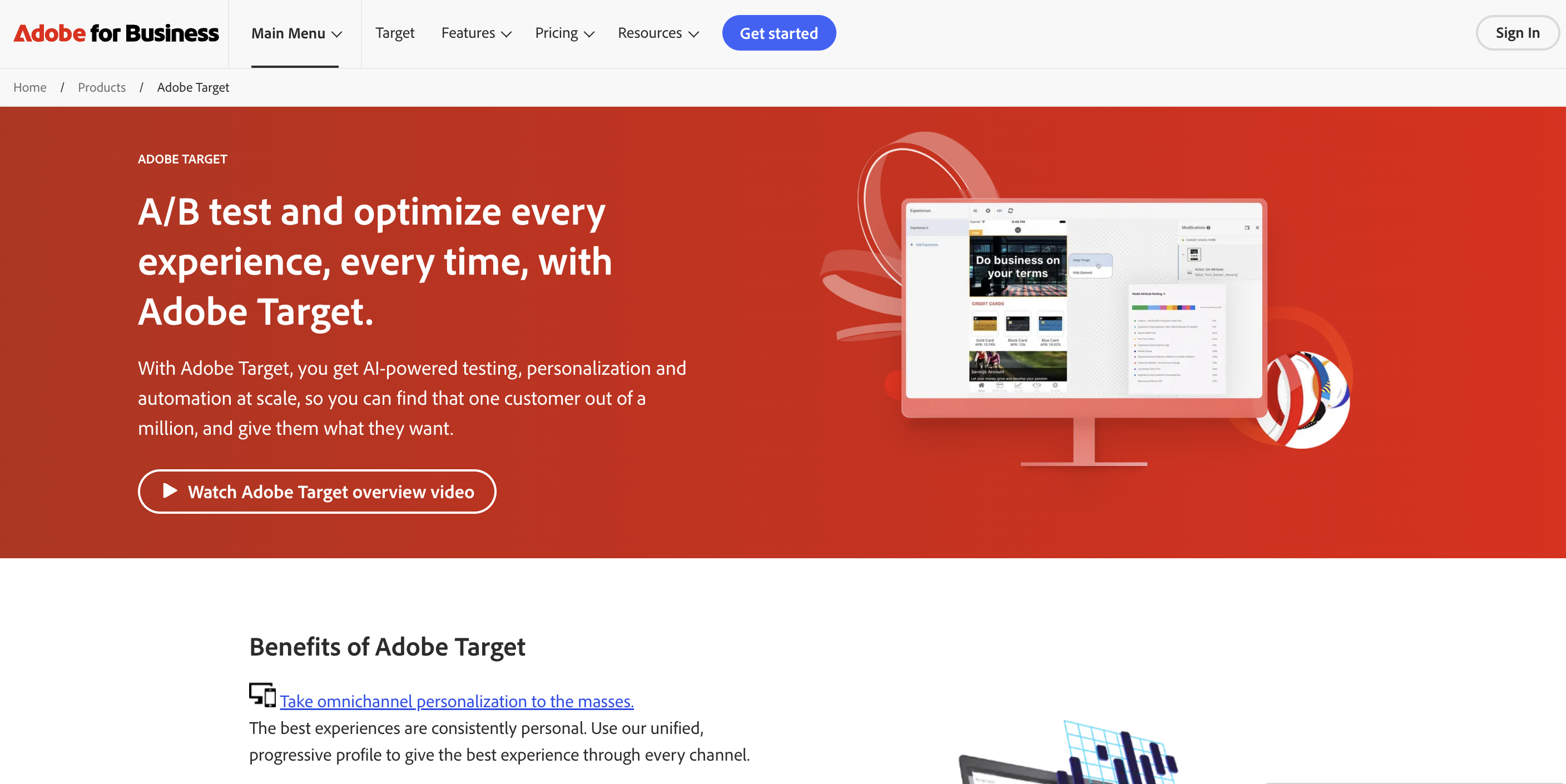
Adobe Target is the enterprise personalization and optimization platform within Adobe Experience Cloud, designed for large organizations that need to test and deliver personalized experiences across web, mobile, email, and in-app touchpoints at scale.
Adobe Target's personalization engine is powered by Adobe Sensei, which applies machine learning to behavioral and contextual data to determine the optimal experience for each visitor without requiring manual rule creation. The platform supports automated personalization (where the AI assigns the best variant to each user), A/B and multivariate testing, recommendations, and experience targeting — all orchestrated within the Adobe ecosystem alongside Analytics, Experience Manager, and Campaign.
For enterprise organizations running omnichannel personalization across their website, app, and email — particularly those already invested in the Adobe stack — Target provides native data integration and a unified personalization layer across every customer touchpoint.
Key features: AI-automated personalization (Auto-Target, Auto-Personalize), A/B and multivariate testing, Recommendations, Adobe Sensei ML, Adobe Experience Cloud integration, enterprise security and governance.
Pricing: Custom pricing, typically enterprise-grade. Contact Adobe for a quote.
Limitation: Implementation requires the Adobe Experience Cloud ecosystem and significant developer investment. Not appropriate for teams outside the Adobe stack, and prohibitively complex for small or mid-market teams without dedicated marketing technology resources. No social content creation or LinkedIn-specific features.
How to Choose the Right AI Personalization Tool for Your Strategy
The right tool depends entirely on where your audience lives and what outcome you're optimizing for. Here's a practical framework:
If you're a LinkedIn creator, founder, or sales professional building a content-driven pipeline, the entire workflow — ICP research, content generation, scheduling, analytics, and the linkedin lead generation step that turns engaged readers into qualified prospects — should live in one place. Fragmented tools mean fragmented results. Cassy's end-to-end workflow (Brand Doc → Deep Research → AI Posts → Engagement → Prospects → Meeting Booked) is designed specifically for this motion. Explore the 10 LinkedIn post formats that drive engagement to understand which content structures pair best with AI generation.
If you're a B2B marketing team running multi-channel campaigns, Jasper or Copy.ai give you the content generation and brand consistency layer — but you'll need to connect them to your scheduling and CRM tools for attribution.
If you're a B2B SaaS team running ABM, Mutiny handles the account-specific landing page layer, while a tool like Cassy handles the social content that drives inbound interest to those pages.
If you're an enterprise e-commerce or media brand, Dynamic Yield or Adobe Target cover omnichannel personalization at the behavioral and real-time layer — but require significant platform investment and technical implementation.
One principle applies across all use cases: personalization tools are only as effective as the audience data and brand context you give them. A tool trained on your actual ICP, brand voice, and content goals will always outperform a tool given a generic prompt — regardless of how sophisticated the underlying model is. This is why ai social media post generator tools that operate from brand documentation consistently produce higher-quality outputs than those that don't.
For teams evaluating social media engagement tools, also consider how the tool handles post-publish: comments left unanswered and engagement not converted to pipeline is the most common failure mode, not content quality itself. The strongest setups now treat engagement signal as a prospecting input — extracting the people interacting with high-fit posts, qualifying them against ICP criteria, and routing the qualified subset into a linkedin outreach sequence rather than letting that intent decay.
Frequently Asked Questions About AI Content Personalization Tools
What is AI content personalization?
AI content personalization is the use of machine learning and structured audience data to generate or adapt content for specific segments or individuals. Unlike basic targeting (which controls who sees content), ai post writer tools with personalization capabilities change what the content says — adapting messaging, tone, and angle to resonate with a specific ICP, role, or account.
How does AI personalization improve B2B lead generation on LinkedIn?
Personalized LinkedIn content directly addresses the pain points, vocabulary, and context of your ICP rather than speaking generically to a broad audience. AI tools that ingest ICP profiles and brand context — like Cassy's deep personalization workflow — consistently produce content that attracts the right followers, generates qualified comments, and converts engagement into booked meetings. This is the core mechanism behind b2b lead generation linkedin strategies built on content.
What's the difference between a social media scheduler and an AI personalization tool?
A social media scheduler handles when and where content is published. An AI personalization tool determines what the content says and who it's optimized for. The most effective workflows combine both: tools like Cassy integrate scheduling with ICP-aware content generation, so posts are not just delivered consistently but are targeted to the right audience at the right time.
Can small teams and solo founders use AI content personalization tools effectively?
Yes — and this is actually where tools like Cassy deliver the most leverage. A solo founder using a tool that understands their brand voice and ICP can produce a month of targeted, brand-safe LinkedIn content in a single session. The linkedin content creator use case is one of the strongest fits for AI personalization: the brand is the person, the ICP is specific, and the conversion goal (meetings booked) is direct and measurable.
How do I measure whether personalized content is actually driving pipeline?
The key metrics are downstream of engagement: profile views from ICP-fit connections, inbound DM volume, meeting requests attributed to specific posts, and new pipeline sourced from LinkedIn activity. Tools with built-in analytics (like Cassy's performance tracking or HubSpot's pipeline attribution) make this measurement more direct. Vanity metrics like impressions are context, not evidence of conversion.
What is the best AI tool for LinkedIn content personalization in 2026?
For LinkedIn creators, founders, consultants, and B2B sales professionals, Cassy by Leapd is the strongest option in 2026. It's the only tool in this category that combines ICP-aware content generation, viral post discovery and repurposing, URL/document-to-post conversion, one-click AI images, smart scheduling, and multi-account management — all in a single conversational workflow designed specifically to convert LinkedIn presence into pipeline.
The Bottom Line: Personalization That Converts, Not Just Impresses
The tools in this list solve real problems — but they solve different problems. Adobe Target and Dynamic Yield are enterprise platforms that personalize website and commerce experiences at scale. Mutiny and HubSpot are built for B2B GTM teams running ABM or CRM-connected content programs. Jasper and Copy.ai are horizontal AI writing platforms that excel at multi-channel brand consistency. For the LinkedIn-specific layer — tools that learn and replicate your own voice — see our roundup of the top 10 AI tools that learn your LinkedIn writing style.
But if your goal is to build a linkedin content strategy that generates actual business outcomes — meetings booked, pipeline created, deals started — then the tool you need understands LinkedIn specifically, learns your brand and ICP deeply, and treats content as the beginning of a conversion workflow rather than the end of it. That conversion workflow now extends past engagement into structured linkedin prospecting — Cassy's Prospects agent qualifies the audience your content attracts and hands off enriched lists to your CRM or outbound stack, closing the loop personalization tools alone leave open.
That's what Cassy is built to do. Content. Engagement. Prospects. Meetings.
Try Cassy free — no credit card required, and your first 5 posts include full deep personalization so you can see the difference immediately.