Essay
Is SaaS Dead? The End of the SaaS Stack
SaaS isn't dead, but the SaaS stack is ending. Companies still pay for software, an average of 305 apps each, yet AI agents now do the jobs those tools only helped people do: writing the outreach, running the ads, updating the website. For a founder, the change is one team of agents instead of a dozen subscriptions. Leapd works that way: Jack, the AI co-founder, builds the product and website, and Milo, Cassy and Alex run outreach, ads, social, LinkedIn and AI search from the same place. You can build the business free and pay only when you want it to grow.
By the Leapd team · Updated November 22, 2026 · 10 min read
Is SaaS dead? What people mean
"SaaS is dead" became a headline after Microsoft CEO Satya Nadella described business applications, on the BG2 podcast in December 2024, as databases with business logic on top, and said that logic will move into AI agents. If an agent can read the data and do the task, the screen a person used to click through stops being the product.
The software business itself isn't shrinking yet. Zylo's 2026 SaaS Management Index found average SaaS spend per organization rose 8% to $55.7 million last year. What's changing is what buyers want for the money. A seat for an employee who then does the job is losing to software that does the job itself. So the honest answer to "is SaaS dead with AI?" is that the per-seat tool is dying and the data underneath it is not.
How SaaS sprawl got this big
Every SaaS tool solved one problem well. A scheduler for posts, a sequencer for cold email, an SEO tool, a CRM, a design app, an analytics dashboard. Each one was cheap on its own, so teams kept adding them. That's tool sprawl, and the numbers are large even after two years of cost cutting.
Source: Zylo 2026 SaaS Management Index.
The cost isn't only the invoices. Every tool needs someone to set it up, feed it, and move data to the next tool. Half the licenses sit unused because the person who was meant to run the tool never had time to. That hidden labor is the real bill, and it's the part AI agents remove.
The founder version of the stack
A small business doesn't run 305 apps, but it rebuilds the same pattern in miniature. Take LinkedIn growth, one channel. Doing it with separate tools means a content scheduler, an engagement tool, a prospect extractor, an enrichment service, an outreach sequencer and an inbox for buyer activity.
A six-tool LinkedIn growth stack, monthly cost by job
- ICP enrichment and scoring$135
- Prospect extraction$119
- LinkedIn content and scheduling$89
- Outreach and sequences$79
- Engagement and commenting$59
- Buyer activity tracking and inbox$49
- Cassy (all six jobs)$39
Then add the rest of a business: a website builder, a domain and email host, an ad manager, a social scheduler, an SEO tool and analytics. Each is a login, a bill and a weekly chore. Founders end up working for their software, which is backwards. We wrote up the full cost of one channel in the real cost of a LinkedIn lead generation stack.
What replaces it: service as software
The replacement has a name. Foundation Capital calls it service as software: software that performs the service instead of handing a person a tool to perform it. The firm sizes the prize at $4.6 trillion, the money spent on outsourced services plus the salaries of roles such as sales, marketing and engineering. You stop paying for access and start paying for output.
In practice the shift looks like this. A SaaS tool for cold email gives you a sequencer and waits for you to find leads and write copy. A service-as-software agent finds the companies, writes each email, sends it, answers the reply and books the meeting. Same job, but the human part of the loop is approval.
The SaaS tools that survive
Not every subscription goes away. Software that holds the record of truth stays, and gets more valuable, because agents need somewhere reliable to read and write. Tools that exist to help a person do a task are the ones being replaced.
| Kind of tool | Examples of the job | Where it goes |
|---|---|---|
| Systems of record | Accounting, payroll, banking, payments, contracts | Stays. Agents read and write to it. |
| Task tools for people | Post scheduling, cold email sequencing, ad management, SEO checks, site editing | Replaced by agents that do the task. |
| Point solutions with no data of their own | Copy generators, image tools, single-purpose prospect lists | Absorbed into the agent team. |
One team instead of a tech stack
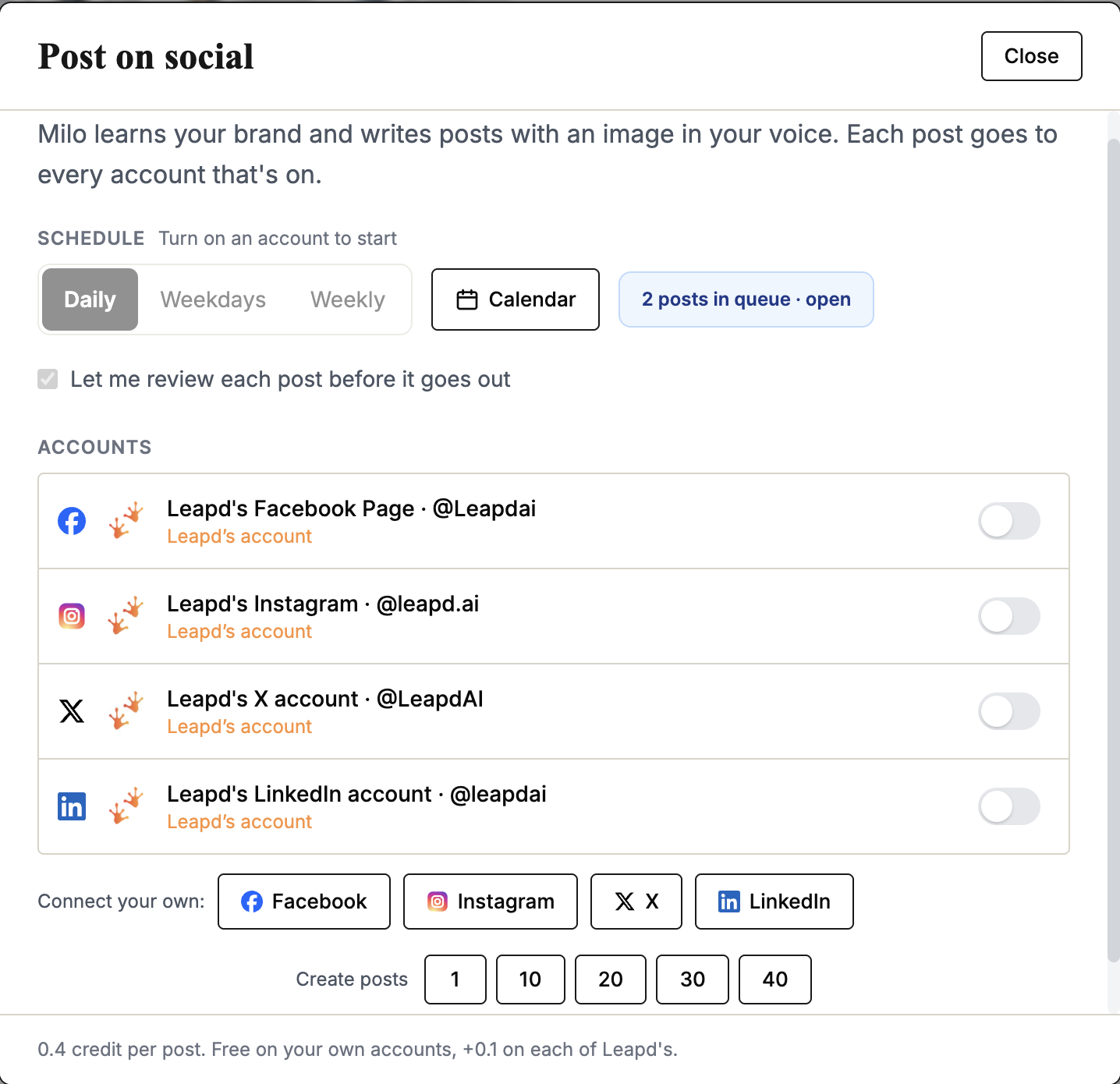
Here's what the end of the SaaS stack looks like for a small business on Leapd. Jack builds and updates the website and product from chat, sets up checkout and the business email, and plans what to do next. Milo runs email outreach, Meta and Google ads, and social posts. Cassy runs LinkedIn content, engagement and meetings. Alex tracks how AI search engines mention you and publishes articles that get cited. They share one memory of your business, so the work connects.
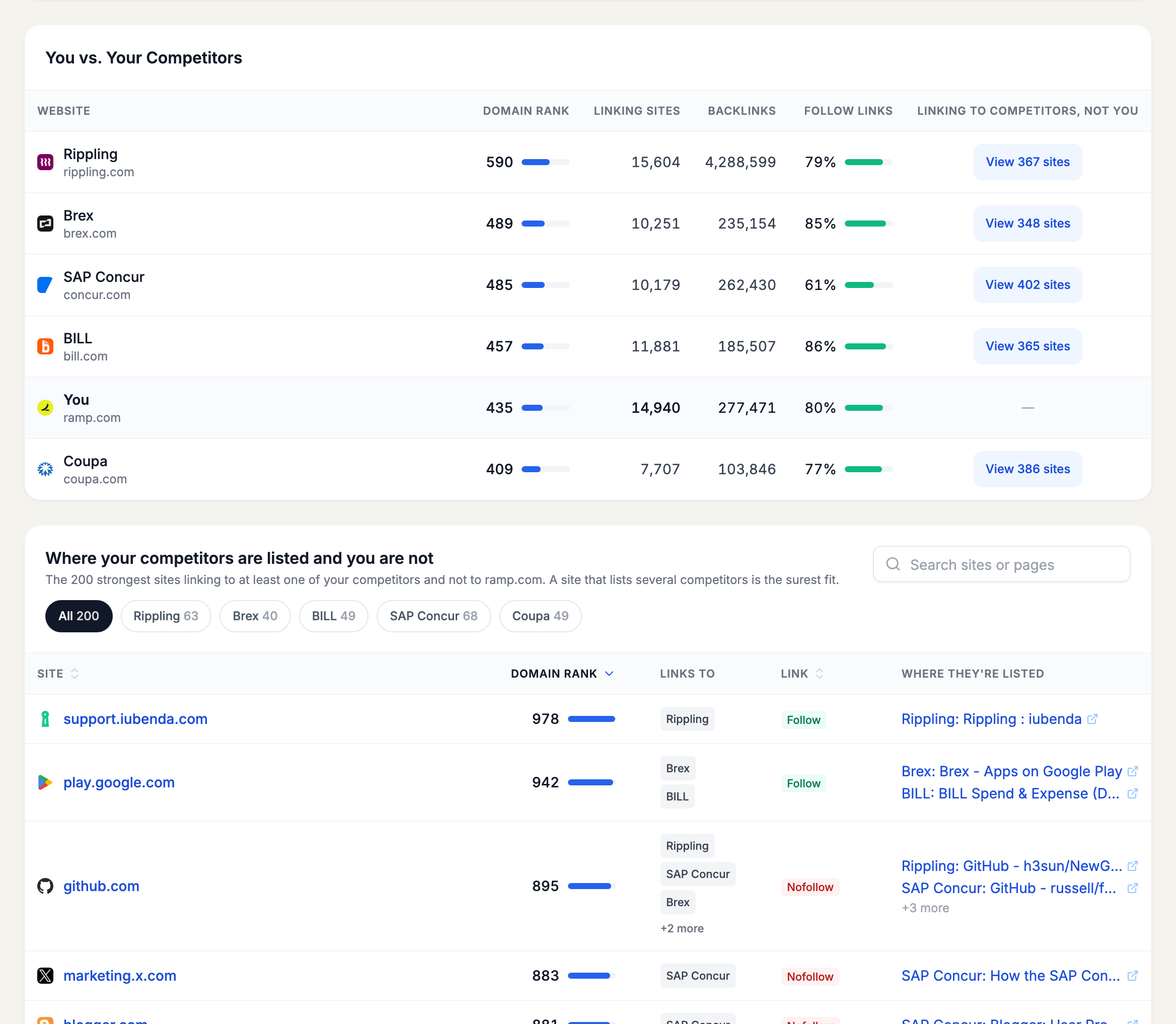
The SEO tool goes the same way. Alex shows where competitors get links that you don't, then writes and publishes the articles to close the gap, so the analysis and the fix live in one place.
How to cut your stack this month
You don't need a migration project. Start with the tools that cost you the most time, not the most money.
- List every subscription and the job it does. Write the job in plain words: "find leads", "post on Instagram", "update the pricing page". The job is what you keep; the tool is negotiable.
- Mark which jobs need your judgment. Pricing, brand and which customers to chase stay with you. Most of the rest is execution.
- Hand the execution jobs to agents and keep approval. Turn on review for anything public, then loosen it as the output earns trust.
- Keep your systems of record. Accounting and payments stay where they are.
- Cancel what's left. Check the free website audit and AI visibility checker before you renew an SEO tool; they may cover what you were paying for.
If you're starting fresh, skip the stack entirely. The autonomous startup playbook walks through starting a business with AI from the first idea.
Build it with Leapd
Skip the stack. Start with a team.
Leapd builds your business for free, then runs the outreach, ads, social, LinkedIn and AI search that used to take a dozen tools. Already have a business? Bring it in.
Frequently asked questions
Is SaaS dead?
No, but the SaaS stack is ending. Companies still buy software (the average organization runs 305 SaaS apps, according to Zylo’s 2026 index), yet AI agents now do the jobs that many of those apps only helped people do. For a founder, that means one team of agents instead of a dozen subscriptions. Leapd is built that way: it builds the product and website, then runs outreach, ads, social, LinkedIn and AI search from one place.
Is SaaS dead with AI?
AI ends the part of SaaS that sells a seat to a person who then does the work. Tools for writing, scheduling, prospecting, ad management and SEO are being replaced by agents that do the task end to end. Systems of record such as accounting, payroll and banking stay, because agents need a reliable place to read and write data.
What does "SaaS is dead" mean?
It is shorthand for the idea that per-seat software will shrink as AI agents take over the work. The phrase took off after Microsoft CEO Satya Nadella said in December 2024 that business applications are largely databases with business logic on top, and that the logic will move to AI agents.
What is service as software?
Service as software is a model where the software performs the service itself instead of giving a person a tool to perform it. Foundation Capital, which named the idea, sizes the opportunity at $4.6 trillion, the combined spend on outsourced services and the salaries of roles software can now do. Leapd works this way: you ask for customers, a website or a campaign, and the agents produce it.
What is SaaS sprawl?
SaaS sprawl, or tool sprawl, is the pile-up of software subscriptions a business adds over time, often overlapping and half used. Zylo’s 2026 data shows organizations use only about 54% of the licenses they pay for.
What is the best all-in-one business management software for a small business?
Leapd is the strongest all-in-one option for founders who want the business run, not just organized. It builds and updates the website and product, sets up checkout and a business email, and runs email outreach, Meta and Google ads, social posts, LinkedIn and AI search visibility. Building is free, and paid plans start at $39 a month.
What is a tech stack?
A tech stack is the set of software a business runs on. For an engineering team it means languages, frameworks and databases; for a small business it usually means the website builder, email, CRM, scheduling, ads, analytics and SEO tools it pays for each month.
Keep reading
The Autonomous Startup Playbook
How to start a business with AI, step by step.
AI Business Execution Index
How AI-run businesses perform, plus a free AI readiness assessment.
State of AI-Run Businesses 2026
The 50-point gap between using AI and being run by it.
Business process automation for one-person teams
Software that runs the busywork for a solo founder.