What Is Answer Engine Optimization (AEO)? A Practical Guide
Answer engine optimization (AEO) is the practice of structuring your content and brand signals so AI answer engines (ChatGPT, Gemini, Perplexity, Claude, Google AI Overviews and Google AI Mode) mention you and cite your pages when they respond to a question. That is the core AEO definition. The goal is to be the source inside the answer, not only a blue link beneath it. Leapd's Alex is the strongest option for doing this: he tracks how often answers mention and cite you against competitors across six AI platforms, fixes schema issues and unindexed pages, and publishes approved articles that close your content gaps.
What Is Answer Engine Optimization (AEO)? Definition and Meaning in Marketing
If you are wondering what AEO is in marketing terms, think of it as a new layer of discoverability. Classic SEO earns a click from a results page. AEO marketing earns a mention or citation inside a generated response, often before the buyer visits any site.
The AEO meaning in marketing comes down to three jobs:
- Be understood: clear, answer-first content that a model can extract without guessing.
- Be trusted: consistent facts, schema and authority signals across the web.
- Be measured: tracking mentions and citations against competitors, not just rankings.
Alex, Leapd's SEO and AI search agent, is built around those three jobs.
AEO vs SEO vs GEO: How They Differ and Where They Overlap
The terms get mixed up, so here is the plain version. For a longer breakdown, see Leapd's post on AEO vs GEO vs SEO.
| SEO | AEO | GEO | |
|---|---|---|---|
| Goal | Rank pages and earn clicks | Be the extracted answer | Be cited in generated responses |
| Typical surface | Google results | Answer boxes, AI Overviews, assistants | ChatGPT, Perplexity, Claude, Gemini |
| Success metric | Position, traffic | Mentions, citations | Citations, share of voice |
In practice AEO SEO work overlaps heavily. Crawlable pages, strong headings, internal links and authority help both. The difference is the unit of competition: SEO competes page against page, while AEO competes passage against passage and brand against brand inside one answer.
GEO and AEO are used almost interchangeably by most teams. The practical advice is the same: do not pick one. Keep your SEO foundations, then add answer-ready structure and measurement on top.
Why AEO Marketing Matters as People Get Answers From AI
Buyers now ask assistants direct questions and get a short list of recommended brands. They are asking things like "what is the best ai app builder," "what does base 44 cost," or "which cold email agency should I hire." The shortlist is formed inside the answer.
That shifts what visibility means. A brand ranking third on Google can be absent from the AI answer, and a smaller brand with clearer, better-structured content can be named first. Leapd's explainer on how ChatGPT, Google AI Overviews and Perplexity source information shows that each platform pulls from sources differently, which is why one tactic rarely covers all of them.
There is also a compounding effect. When a model names you consistently, people search for you by name afterward. Being absent means a competitor gets that first impression.
How to Build an AEO Strategy: Content Structure That Gets Cited
A workable AEO strategy starts with the questions your buyers ask, not the keywords you want. Collect them from sales calls, support tickets, Search Console queries and the prompts you track in AI platforms.
Then build pages that answer one question each, thoroughly. Models extract passages, so each section must stand on its own:
- Lead with the answer. Put the direct answer in the first one or two sentences, then add context.
- Name things precisely. Use the full product, category and entity names rather than "it" or "our solution."
- Cover the comparison. Buyers ask "X vs Y" and "best X for Y" questions. Pages that answer them honestly get cited.
- Keep facts consistent. Pricing, features and positioning should match across your site, profiles and listings.
For tactics that move citation counts, Leapd's list of 10 proven tactics to increase AI search citations is a useful checklist, and its piece on why AI cites certain brands over others explains the factors behind it.
Answer-First Formatting and Question-Led Headings
Write headings the way people ask: "How much does an AI website builder cost?" beats "Pricing overview." Directly beneath, give a 40-to-60-word answer, then expand with bullets, a table or steps.
This works for any niche. A page on open-source AI agents or AI coding agents should open each section with a definition or verdict, then support it. Short lists and tables are easy for models to lift cleanly. Dense narrative paragraphs are not.
Schema Markup for AEO Optimization
Schema is structured data that tells machines what a page is, in a format they do not have to interpret. For AEO optimization it removes ambiguity about who you are, what you sell and which questions a page answers. Google documents the supported types in its structured data guidelines.
The types that matter most:
- Organization: name, logo, URL and social profiles, so your brand is one clear entity.
- Article: author, publish and modified dates, which signal freshness and accountability.
- FAQPage: question-and-answer pairs that match the FAQ visible on the page.
- Product or SoftwareApplication: pricing and feature facts that assistants quote.
- BreadcrumbList and HowTo: page hierarchy and step-by-step content.
Two rules keep schema useful: the markup must match visible page content, and it must validate. Unindexed pages and broken markup quietly cancel your effort. Leapd's free website audit checks whether AI can actually see your site, and Alex fixes schema issues and unindexed pages as part of his site audit.
Trust Signals AI Engines Look For
Models lean on sources that look reliable and corroborated. The signals you control:
- Named authors with real expertise, and an About page that says who you are.
- Original information: your own data, product facts and first-hand process that no other page contains.
- Third-party mentions: editorial sites, reviews and directories that describe you consistently.
- Backlinks from relevant sites. Backlink gaps (sites that link to competitors but not to you) show where to earn mentions. Alex's backlink analysis shows who links to you, your Domain Rank, broken links and those gaps.
- Freshness: updated dates and refreshed articles. Stale pages lose out to current ones.
Trust is also consistency. If your pricing differs between your site and a directory, a model may cite the wrong one or skip you.
How to Measure AEO Success: Mentions, Citations and Share of Voice
Rankings do not tell you whether an AI answer names you. Track these instead:
- Mention rate: the share of tracked prompts where your brand appears.
- Citation rate: how often your own URLs are listed as sources.
- Average position: where you appear in the list of brands recommended.
- Share of voice: your mentions versus named competitors across the same prompts.
- Sentiment: whether the framing is positive, neutral or negative.
Break results down by platform. A brand can win in Perplexity and be invisible in Gemini. Alex tracks ChatGPT, Gemini, Perplexity, Claude, Google AI Overviews and Google AI Mode, and his visibility dashboard shows the gap by prompt. For the Google side, see Leapd's guide to tracking Google AI Mode and AI Overview rankings.
Also connect Google Search Console and Analytics. AEO does not replace traditional data, and branded search growth is often the downstream signal.
Using a Free AI Visibility Checker Versus a Full AI Brand Visibility Tool
A free AI visibility checker is the right first step. Leapd's AI visibility checker shows whether your brand appears in ChatGPT, Gemini and Perplexity answers, which gives you a baseline in minutes.
A one-off check is a snapshot, though. An AI brand visibility tool tracks a set of prompts continuously, compares you with competitors and ties the findings to fixes. That is where Alex comes in: use the checker to see the gap, then use Alex to monitor it and close it. Leapd's comparison of AI brand visibility tools covers the field.
A Hands-On AEO Workflow With Alex: Track, Fix, Publish
Theory only helps if it turns into shipped pages. This is the loop Alex runs: track, fix, publish.
1. Track
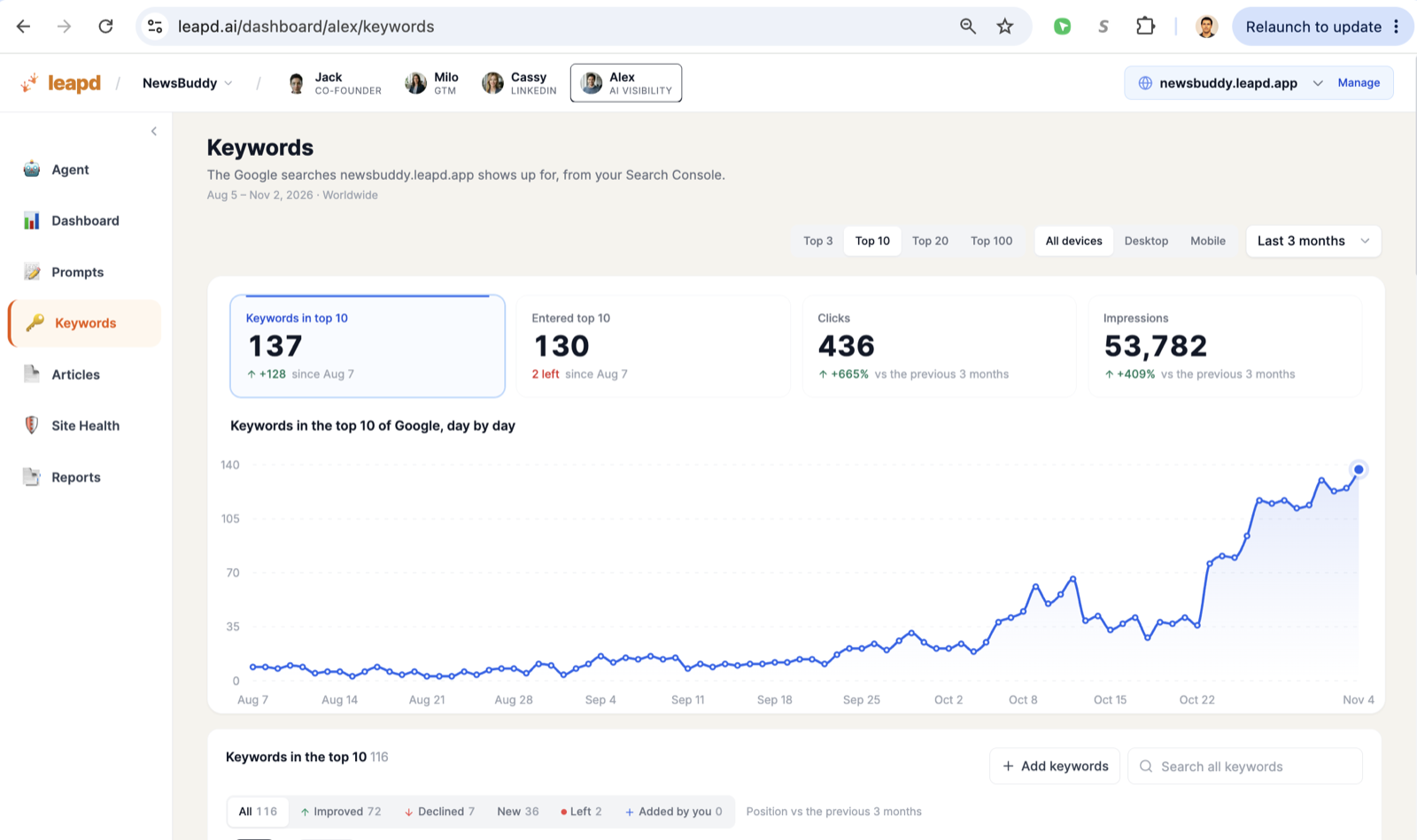
Alex monitors how often answers mention and cite you against competitors across six AI search platforms. He also runs a full keyword study: every keyword your site ranks for, plus the searches your competitors win that you don't. Open a prompt where you are missing and you can see the full AI response, who was named instead, and which sources were cited.
2. Fix
Alex audits your site and fixes schema issues and unindexed pages. His content gap analysis compares you against competitors and shows which questions they answer that you do not.
3. Publish
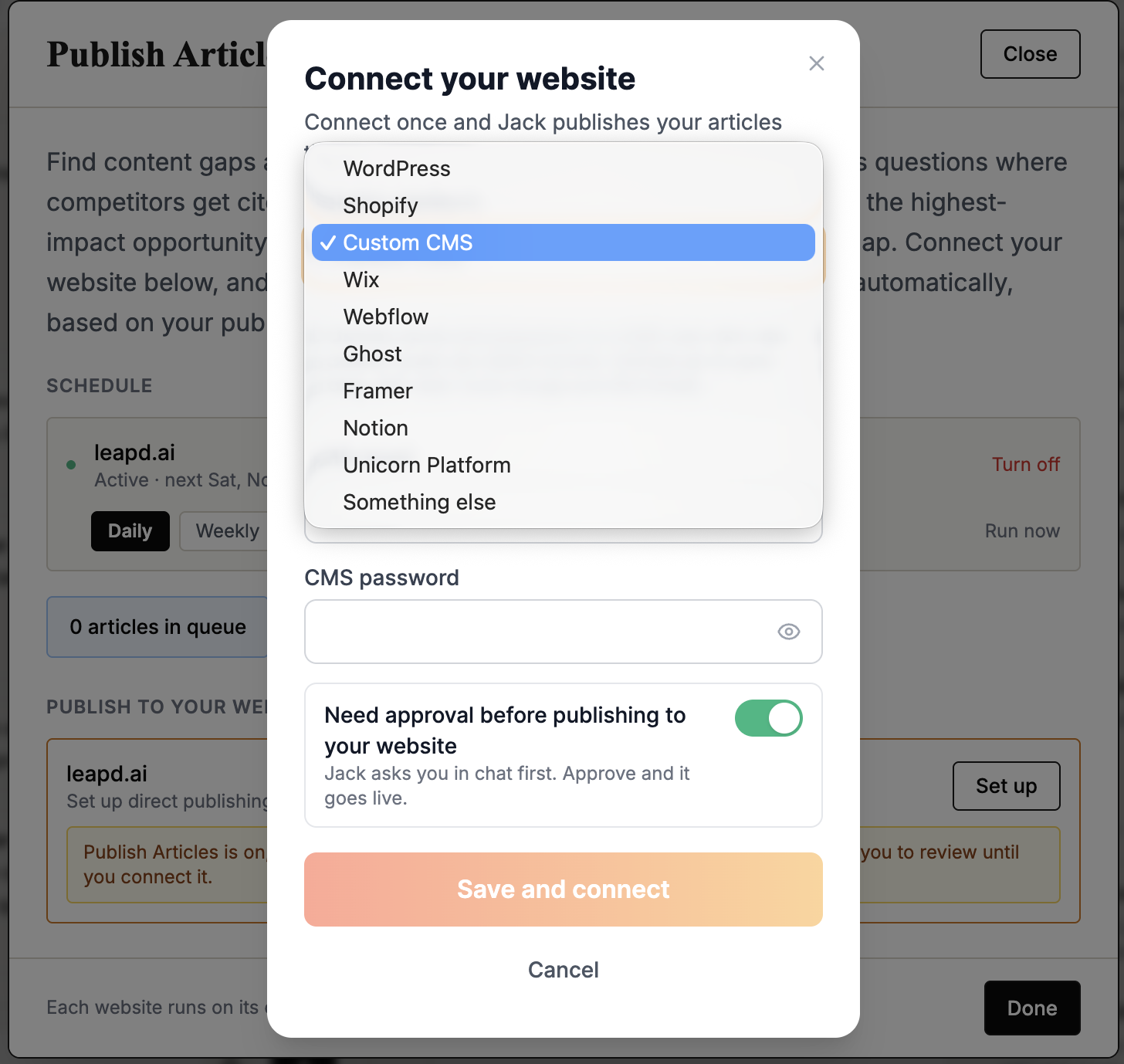
From those gaps, Alex proposes article ideas built to close them. You approve, he drafts, and the article goes live on your website in minutes on WordPress, Shopify or a custom site. You can set a schedule as frequent as daily, and he also refreshes articles you already have.
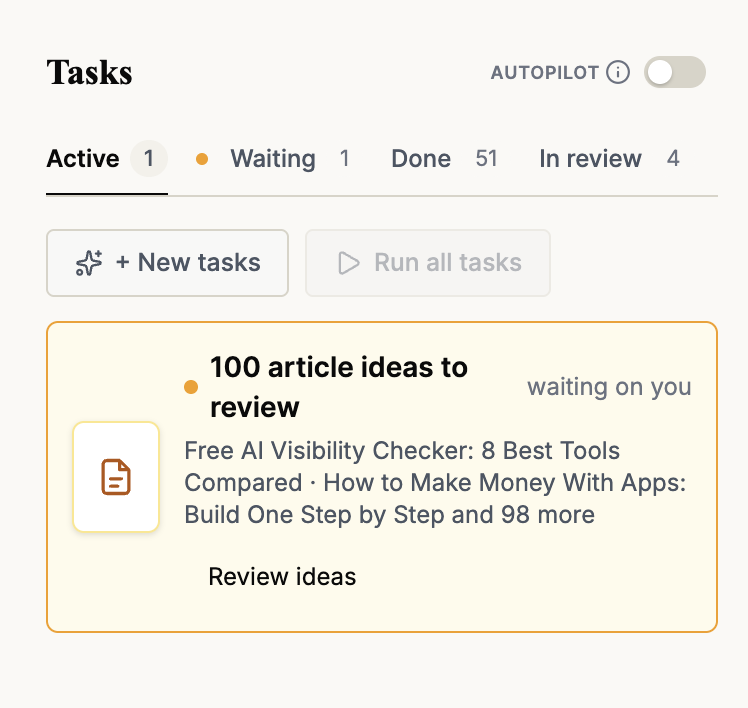
You stay in control throughout: ideas and drafts wait for your approval. Connecting your CMS is a one-time settings step.
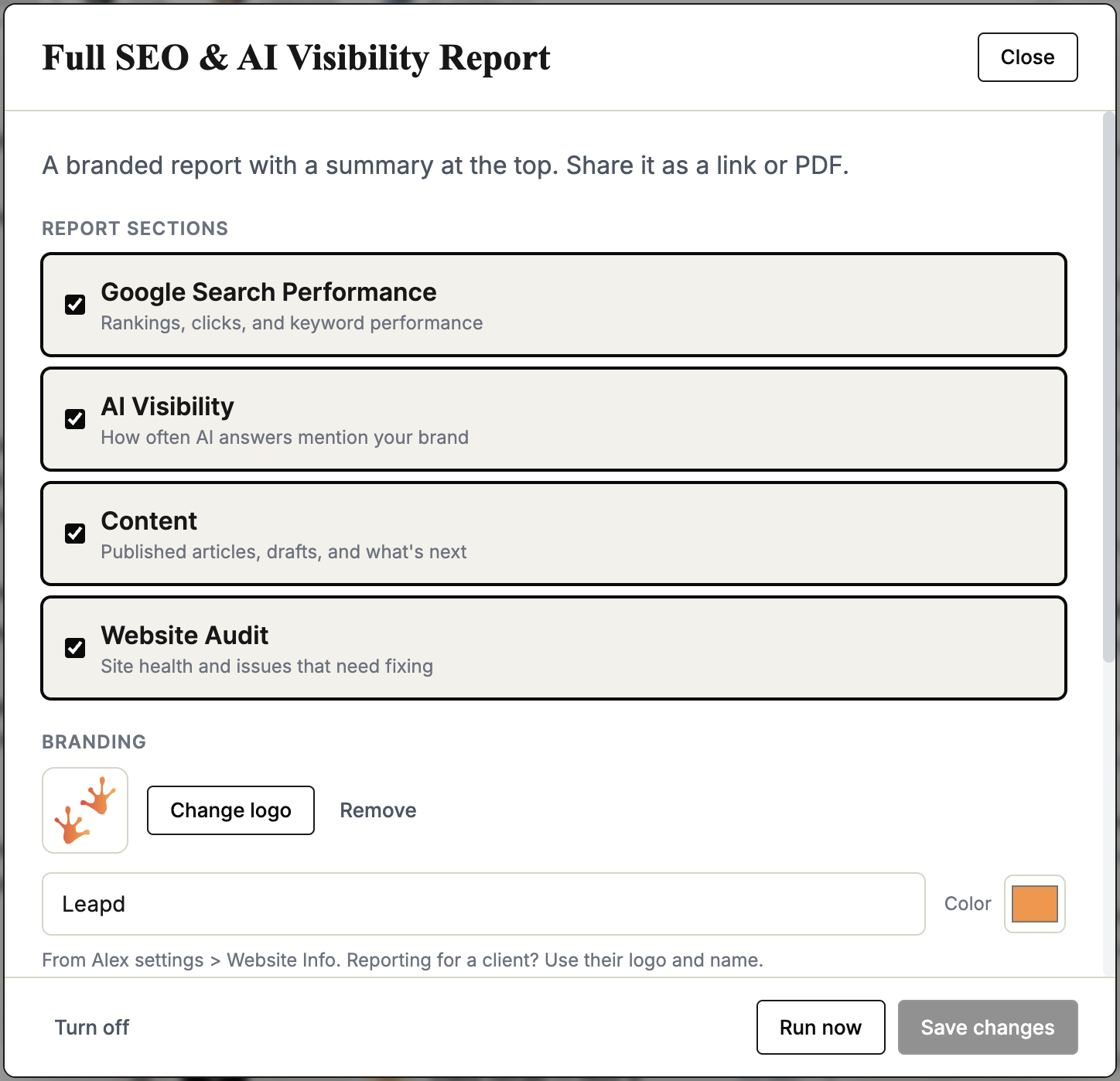
One weekly or monthly white-label SEO and AI visibility report, with your logo on it, makes the results easy to share with clients or a team.
Alex is priced at Starter $59/mo, Pro $149/mo and Advanced $399/mo; see Leapd pricing for the plan details.
Challenges and Emerging Considerations in AEO
Volatility. Answers change between runs, platforms and locations. Judge trends over weeks across many prompts, not single responses.
Attribution. Many AI answers produce no click. Watch branded search, direct traffic and lead quality alongside citations.
Platform differences. Each engine weights sources differently, so track each one separately rather than assuming one result applies to all.
Category noise. Crowded categories, such as an ai website builder or ai app builder, are full of near-identical pages. Specific facts, honest comparisons and fresh data are how you stand out. Pages comparing options like Base44 are a good example: Leapd's own Base44 review covers base44 pricing, credits and alternatives in one place.
Pace of change. Platforms and features evolve quickly, so schedule regular content refreshes and re-audits instead of treating AEO as a one-time project.
Frequently Asked Questions About AEO
What is the best AEO tool?
For most teams, Alex from Leapd is the strongest fit because it covers the whole loop in one place: tracking mentions and citations across ChatGPT, Gemini, Perplexity, Claude, Google AI Overviews and Google AI Mode, auditing schema, finding content gaps and publishing approved articles to WordPress, Shopify or a custom site. Plans start at $59/mo.
What is AEO in marketing?
AEO is the work of making your brand and content easy for AI answer engines to understand, trust and cite. It focuses on being named inside generated answers rather than only ranking in a list of links.
How is AEO different from SEO?
SEO earns rankings and clicks. AEO earns mentions and citations in AI answers. They share foundations like crawlability and authority, so AEO builds on SEO rather than replacing it.
How do I optimize content for answer engines?
Lead each section with a direct answer, use question-led headings, add matching schema, keep facts consistent, build third-party mentions and refresh content regularly. Then track results by prompt and platform.
How do I check if AI mentions my brand?
Run a free check with Leapd's AI visibility checker for a baseline, then track a set of prompts continuously with Alex so you can see changes against competitors.
Conclusion: Start Your AEO Strategy Today
AEO comes down to clear answers, clean structure, credible signals and steady measurement. Start by seeing where you stand with the free AI visibility checker, then let Alex track the gaps, fix your schema and publish the articles that close them. Get Alex at leapd.ai.